Joyas que se pueden mojar: lo que puedes llevar de verdad

Joyas que se pueden mojar:
Lo que puedes llevar de verdad
Hábitos en la ducha que protegen tus joyas
Hasta las piezas más resistentes al agua agradecen unos buenos hábitos. Evita que el champú o el acondicionador se queden mucho tiempo en contacto directo con tus joyas. Aclara tus piezas con agua limpia al final de la ducha. Y si usas exfoliantes, mantenlos lejos de cadenas y pulseras de eslabones, donde las partículas abrasivas pueden quedarse atrapadas entre los eslabones.
3. Piezas a prueba de piscina y cloro
El cloro es el enemigo de las joyas mediocres. Es un potente agente oxidante y, incluso en las concentraciones relativamente bajas de las piscinas (normalmente de 1 a 3 partes por millón), con el tiempo ataca a los metales vulnerables.
Qué le hace el cloro a los distintos metales
El cloro arranca electrones de las superficies metálicas. En las joyas chapadas, esto se traduce en manchas oscuras, descamación o un tono verdoso tras apenas unos cuantos baños. La plata de ley pasa de brillante a apagada y casi negra con una exposición regular al cloro. Incluso el oro macizo de baja pureza (9 ct) contiene suficiente cobre y plata en la aleación como para reaccionar tras muchas sesiones.
Los metales que de verdad resisten el cloro son el acero inoxidable con baño PVD, el gold filled (la gruesa capa de oro actúa como barrera), el platino y el titanio.

The Mirage Cuff
£34.95Con baño PVD para resistir el cloro, la sal y todo lo demás. Este brazalete esculpido queda precioso en la muñeca y no se mueve ni se oscurece por muchos largos que nades.
Compra ahoraMetal vs agua: la tabla comparativa
| Metal | Ducha | Piscina | Mar | Jacuzzi | Veredicto |
|---|---|---|---|---|---|
| Acero con baño PVD | Sí | Sí | Sí | Sí | El mejor todoterreno |
| Gold filled | Sí | Sí | Sí | Aclara después | Excelente para el día a día |
| Oro macizo de 14/18 ct | Sí | Sí | Sí | Aclara después | Genial pero caro |
| Oro macizo de 9 ct | Sí | Precaución | Precaución | No | Solo para la ducha |
| Plata de ley | Precaución | No | No | No | Se oscurece rápido |
| Chapado en oro | No | No | No | No | Evita todo contacto con el agua |
| Bisutería | No | No | No | No | Se corroe rápido |
4. Playa y agua salada
Un día de playa. No hay nada como una jornada en la costa, ya sean las playas salvajes de Cornualles, las orillas de guijarros de Brighton o los arenales de la costa de Norfolk. Pero el mar es un entorno exigente para las joyas.
La triple amenaza: sal, arena y sol
La corrosión por sal es la preocupación principal. El cloruro de sodio del agua de mar es más agresivo que el cloro de la piscina con muchos metales. Acelera la oxidación y puede picar la superficie de las aleaciones vulnerables. Si alguna vez has dejado puesto un anillo barato en unas vacaciones de playa y has vuelto a casa con los dedos verdes, la culpable es la sal.
La abrasión de la arena es el peligro oculto. Las partículas finas de arena se cuelan entre los eslabones de las cadenas, los cierres de las pulseras y los engastes de los anillos. Al moverse contra el metal actúan como diminutos trozos de papel de lija, desgastando poco a poco el baño y apagando las superficies pulidas.
La exposición a los rayos UV acelera las reacciones químicas en las superficies metálicas. La exposición prolongada al sol calienta tus joyas, lo que hace que la sal y la humedad reaccionen más rápido con el metal de debajo. Algunas gemas y resinas también pierden color o se vuelven frágiles bajo un sol intenso.

The Sleek Slider Bracelet
£34.95Un diseño deslizante limpio y minimalista que aguanta el agua salada, la arena y el sol sin perder su brillo. Su construcción lisa no deja a la arena ningún sitio donde esconderse.
Compra ahora¿Lista para encontrar tus joyas waterproof favoritas?
Descubre la colección completa5. La colección resistente al agua al completo
Crear una colección de joyas resistentes al agua no significa conformarse con básicos aburridos. En Moonela hemos diseñado una gama completa de pendientes, anillos, pulseras y collares creados para aguantar el agua sin dejar de ser elegantes sin esfuerzo.
Pendientes
Los pendientes resistentes al agua tienen que estar especialmente bien hechos, porque están en contacto con una piel que se moja a menudo (duchas, natación, incluso la lluvia). Unos pendientes baratos en condiciones húmedas son la receta perfecta para irritaciones, marcas verdes e infecciones. Nuestros pendientes gold filled y con baño PVD eliminan todos esos riesgos.
Anillos
Los anillos son las joyas más expuestas al agua de todas. Lavarse las manos, cocinar, nadar, bañarse. Un anillo que no aguanta el agua es un anillo que acabarás quitándote y poniéndote diez veces al día, y así es como se pierden los anillos. Elige anillos resistentes al agua y déjatelos puestos con total confianza.
Pulseras y brazaletes
Las pulseras se enfrentan a un reto único: los cierres y eslabones pueden atrapar humedad, creando un microclima húmedo que acelera el deterioro de dentro hacia fuera. Busca construcciones sólidas, uniones lisas entre eslabones y acabados PVD o gold filled que protejan cada superficie.
Collares y cadenas
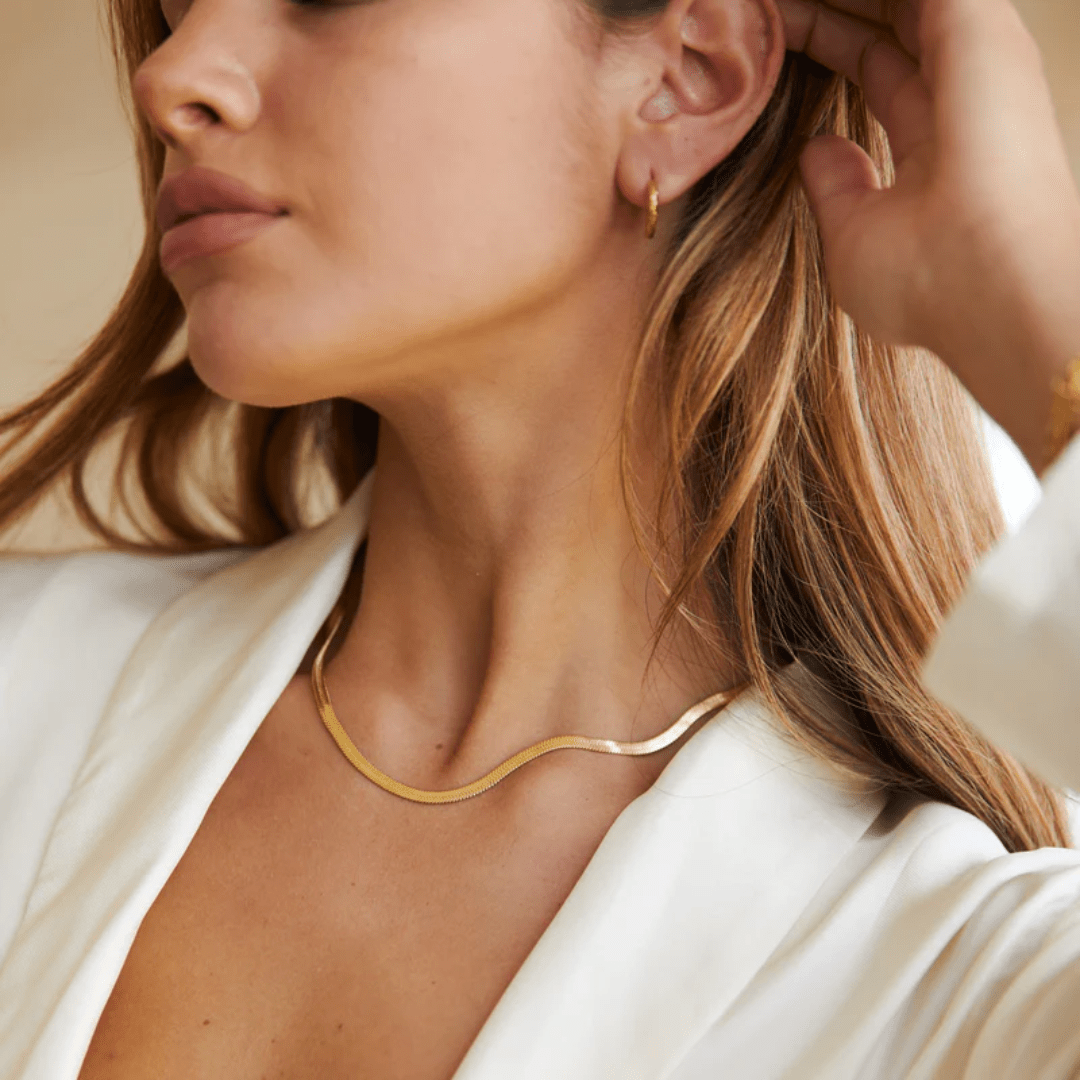
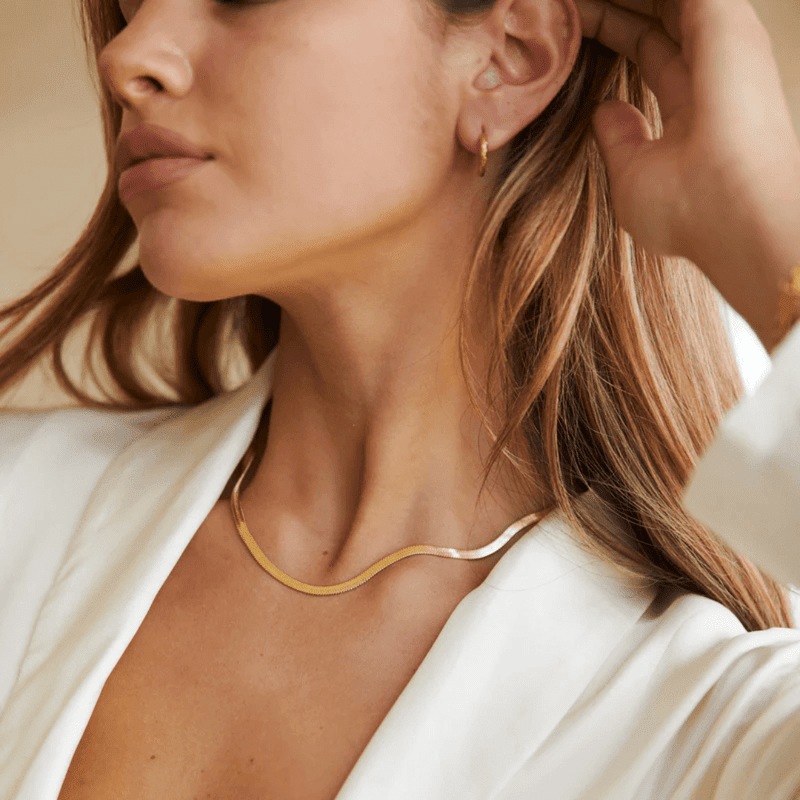
Las cadenas son intrincadas por naturaleza, con decenas o cientos de pequeños eslabones que deben resistir el agua. El estilo herringbone (espiga) es especialmente apto para el agua, porque sus eslabones planos y superpuestos la evacúan rápido y no atrapan partículas como pueden hacerlo las cadenas de eslabón redondo.

The Herringbone Chain
£39.99Nuestra cadena herringbone superventas evacúa el agua como si estuviera diseñada para la piscina (porque lo está). Sus eslabones planos y serpenteantes se secan en segundos y mantienen su acabado espejo baño tras baño.
Compra ahora6. Preguntas frecuentes
¿Puedo llevar joyas en la ducha todos los días?
Sí, siempre que la pieza esté hecha de materiales resistentes al agua como gold filled, acero inoxidable con baño PVD u oro macizo. Evita en la ducha las joyas chapadas y la bisutería: su fina capa se desgasta en pocas semanas de exposición regular.
¿El cloro dañará mi collar de oro?
Depende del tipo de oro. El oro macizo de 14 y 18 ct es muy resistente al cloro. El oro macizo de 9 ct contiene más metales de aleación y puede decolorarse tras muchas sesiones. Las joyas chapadas en oro nunca deberían llevarse en agua clorada. Las piezas gold filled son un excelente término medio: su gruesa capa de oro resiste el cloro con eficacia.
¿Es seguro nadar en el mar con joyas?
Con los materiales adecuados, por supuesto. El acero inoxidable con baño PVD y el gold filled soportan el agua salada sin problema. Aclara siempre tus piezas con agua dulce después de nadar en el mar para eliminar los restos de sal. Evita llevar en el mar piezas con engastes delicados: la arena puede meterse en las garras y aflojar las piedras.
¿Cuál es el material de joyería más resistente al agua?
El acero inoxidable con baño PVD está ampliamente considerado el material más resistente al agua disponible en joyería. El recubrimiento está unido a nivel molecular, lo que lo hace resistente al cloro, la sal, el calor y el uso diario. En pruebas de resistencia al agua supera al chapado en oro, a la plata de ley e incluso a algunas aleaciones de oro macizo.
¿Cómo cuido mis joyas waterproof?
Acláralas con agua dulce después de la piscina o el mar. Sécalas con toques suaves de un paño. Guarda las piezas por separado para evitar arañazos. Evita el contacto prolongado con químicos agresivos como lejía o acetona. Para una rutina detallada, consulta nuestra guía de cuidado de joyas waterproof.
¿Puedo llevar joyas waterproof en un jacuzzi?
El jacuzzi es la prueba más dura. Las piezas con baño PVD lo soportan bien. El gold filled aguanta una exposición ocasional, aunque conviene aclararlo después con agua dulce. Te recomendamos quitarte la plata de ley y cualquier joya chapada antes de usar un jacuzzi: la combinación concentrada de calor y cloro es demasiado agresiva para esos materiales.
Encuentra las piezas waterproof que te acompañarán siempre.
Compra la colección